Doric, Ionic, Corinthian, blah blah blah. If a column doesn’t have a turtle at the bottom, I don’t want it (this joke will make sense in a couple of paragraphs). As you can probably tell from the title of this post, today I’ll be presenting a deep dive into the work of Antoni Gaudi. Considered to be one of the most influential architects of the 20th century, you’re bound to recognize his work, even if his name doesn’t ring a bell. On that topic – even though the word gaudy didn’t come from Gaudi and his extravagant works, some people still say that his style is unnecessarily garish – with which I wholeheartedly disagree.
This past summer, I had the opportunity to travel to Spain with my orchestra to perform. With that, of course, came sightseeing. I had heard Gaudi’s name being passed around before, mostly from people who told me I couldn’t die without seeing his work, but I really didn’t know who he was or why everyone was obsessed with him. If you are facing the same problem, here is his (abridged) life story.
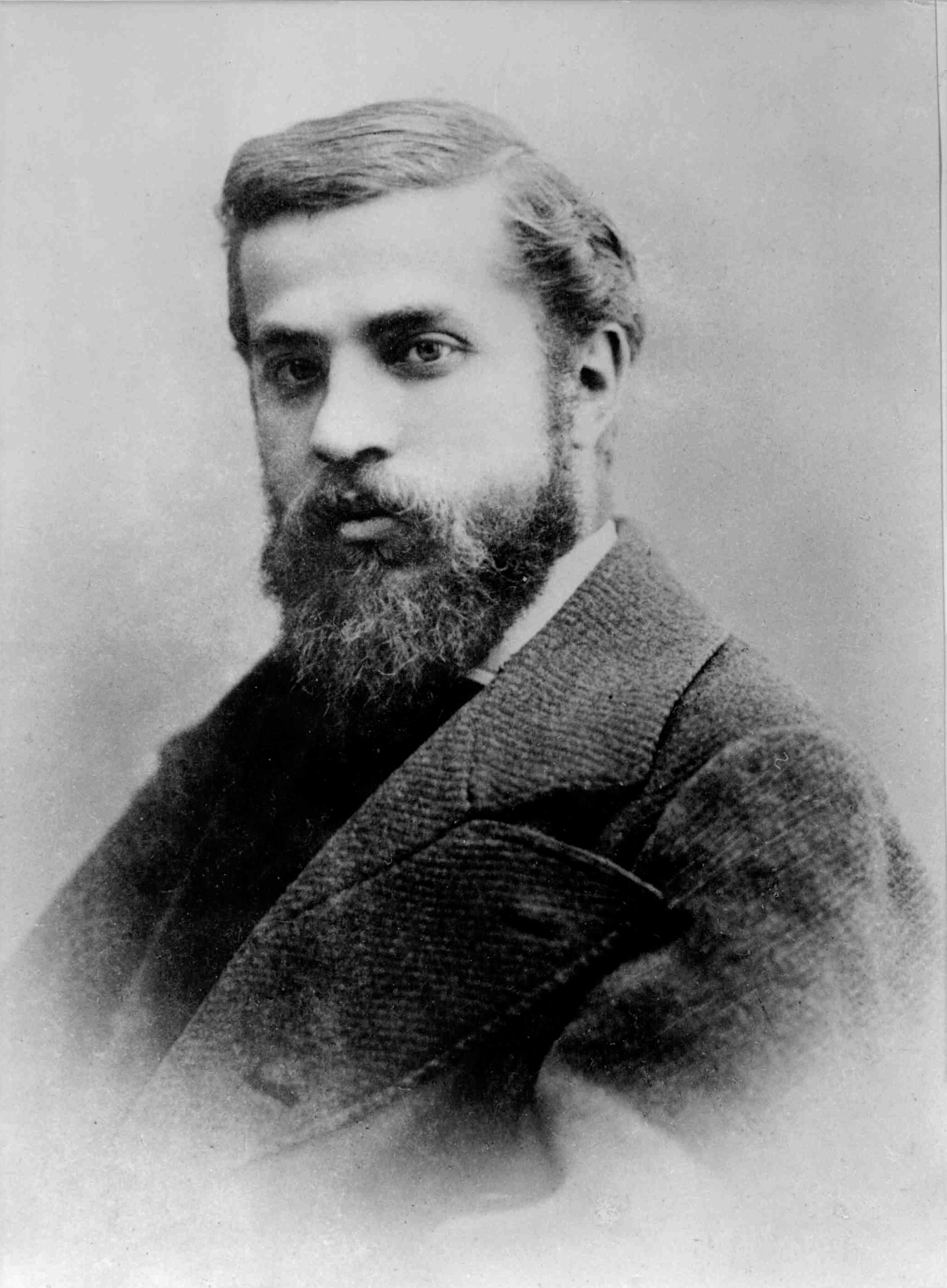
Antoni Gaudi was born on June 25th, 1852 (Cancer king!) in Reus, Catalonia, Spain. As a child, Gaudi often had poor health, and because of that, spent time thinking about nature, which would later influence his designs. In 1870, Gaudi moved to Barcelona to study architecture, where he was an inconsistent yet brilliant student. At the peak of his career, the masterpieces just didn’t stop coming, and Gaudi began to receive universal recognition for his work. Unfortunately, Gaudi was hit by a tram in 1926 and passed away shortly after.
Barcelona was truly Gaudi’s canvas. Some of his most famous works, including the Sagrada Familia, an international architectural landmark, call the city their home. Today, faithful reader, I want to lead you through my favorite (and hopefully now, your favorite) designs from Antoni Gaudi.
Let’s start off with a bang. The Sagrada Familia is a massive church in Barcelona, Spain. At 565 feet, the church is one of the tallest buildings in Barcelona. The craziest part ab
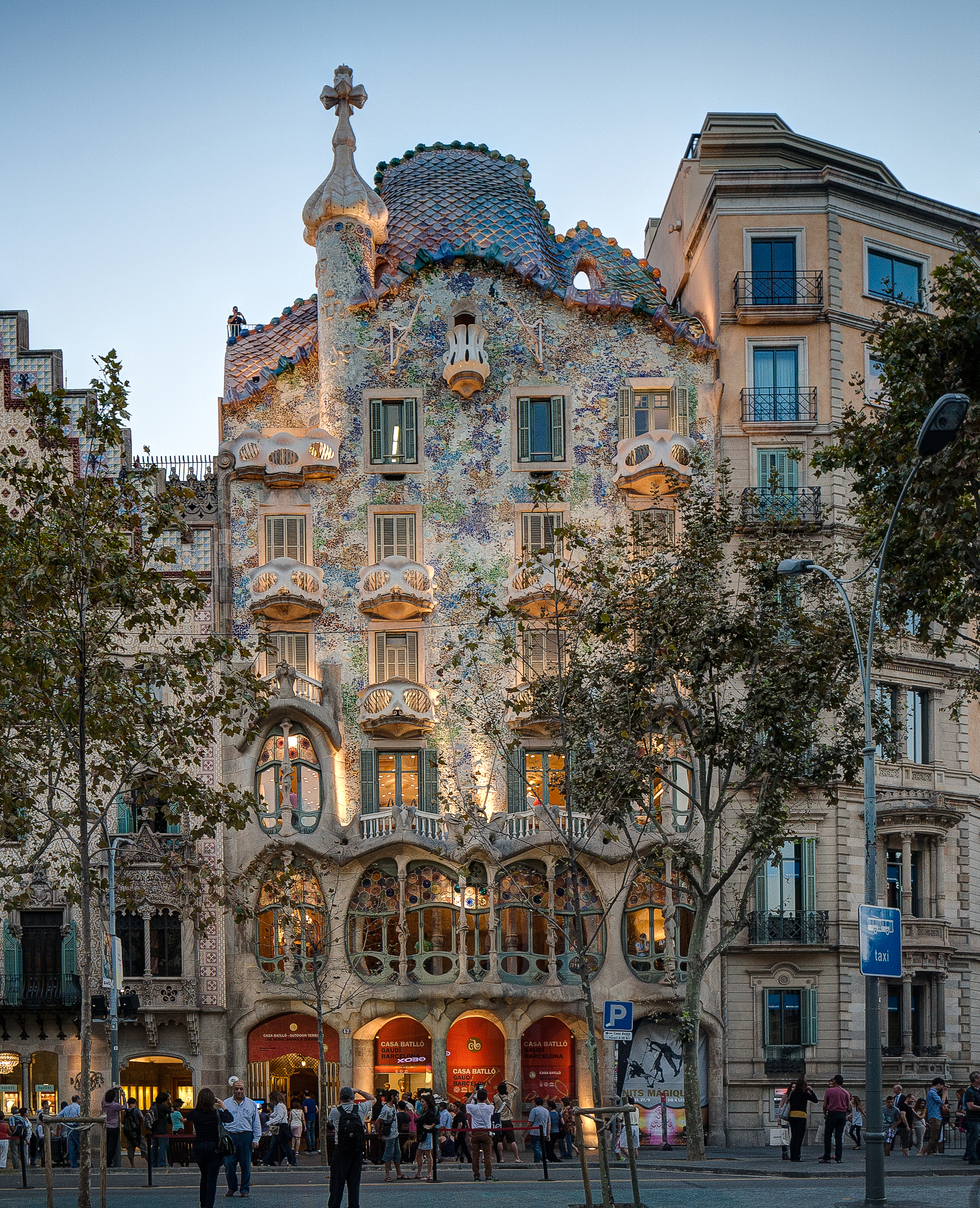 While the Sagrada Familia has to take the cake for Gaudi’s architecture, I want to show you my personal favorite Gaudi design – Casa Batllo. It is incredibly organic and sculptural, with traditional Catalonian mosaic tiles forming a dragon on the facade of the building, a theme that is continued up the surface with the scale-ish shingles. The stunning building is a perfect example of the Catalan Modernisme style of architecture, of which Gaudi is a frontrunner. The interior of Casa Batllo will literally transport you to a vibrant, organic world.
Even just looking at pictures, it’s honestly sad that we regressed to copy-and-paste McMansions. On that note, why don’t we see new buildings today that look like Gaudi’s? Well, actually we do! Kind of. Honestly, tas tes have changed. I have always been a fan of historical architecture and the kind of buildings that would blow your socks off just by looking at them because they’re so bold. And I know I said I was a McMansion hater, but I guess I’m in the minority, because they’re everywhere. Especially in Naperville (please stop building new houses with white siding and black windows, it’s killing me). Anyways, some people just want a house, not a piece of art – and that’s totally fine! There are buildings like Studio Gang’s Aqua Tower here in Chicago and Zaha Hadid’s Serpentine Sackler Gallery that take the same organic forms, but translate them to a more user friendly, modern style that fits today’s trends. In the end, while Gaudi may not have survived to see his greatest work completed, it’s safe to say that his legacy is carried on through some great pieces of architecture today.
Works Cited
Casa Batlló. “Casa Batlló.” Casa Batlló by Antoni Gaudí, Barcelona, 2022, www.casabatllo.es/en/antoni-gaudi/. Accessed 27 Oct. 2022.
Hi Anjana! If I am being completely honest, this has been the most informative blog I have read so far. I have also been blessed with the opportunity to witness Gaudi’s artwork in person. Let me just tell you that when I first saw the La Sagrada Familia, my jaw dropped. I had never witnessed something so unique in my life before the moment I first saw it. My family and I, while we were there, also got the opportunity to go inside and walk up one of the towers. The architecture that you get to see, as you said, is just spectacular. There is such great detail in all the different perspectives of this church. Anyways, my family and I also got to walk through Casa Batllo, and although I am a traditional mansion lover, this tour gave me such new insight. Because I have been able to witness some of Gaudi’s most spectacular artwork, my respect for intricate artists has changed immensely. Even though I have been to these places, I did not really know any of Gaudi’s background and I did not notice some of the specific details that you highlighted in your blog. I wish I could have known it sooner so I could have paid closer attention to some of those small details. Which place did you like visiting the most?
Hey Anjana! I absolutely love the architectural theme of your blog and was considering becoming an architect only last year (have since decided on environmental science), but still deeply appreciate architecture. I am so glad you wrote about Gaudi, because I heard of his name before, but never put his work to his name, and rediscovered my love for the Casa Batllo. I love how it looks like organic art, like something that would be in a disney movie. The window shapes have to be my favorite aspect. It’s so interesting how it is related to a dragon, and I totally see it now. I kind of want my house to look like this. Some of the more functional forms you mentioned later like the Serpentine Sackler Gallery by Zaha Hadid are also very intriguing, have you seen the Al Wakrah Stadium that she is in progress right now? I feel like you would like it. What would you say your architectural style is? I also appreciate how you incorporated humor along with the artistic descriptions to add an element of the unexpected. I will definitely continue to look for elements of Gaudi’s designs in future architectural marvels and am excited to read more of your blogs!