The Big Bang Theory. Last week, I received a comment that I loved even though it stated that The Office was a terrible show that he could just not get into. This week, I am going to take TV shows to a whole new level: how an unlikely show became the most popular and simultaneously hated thing on television.
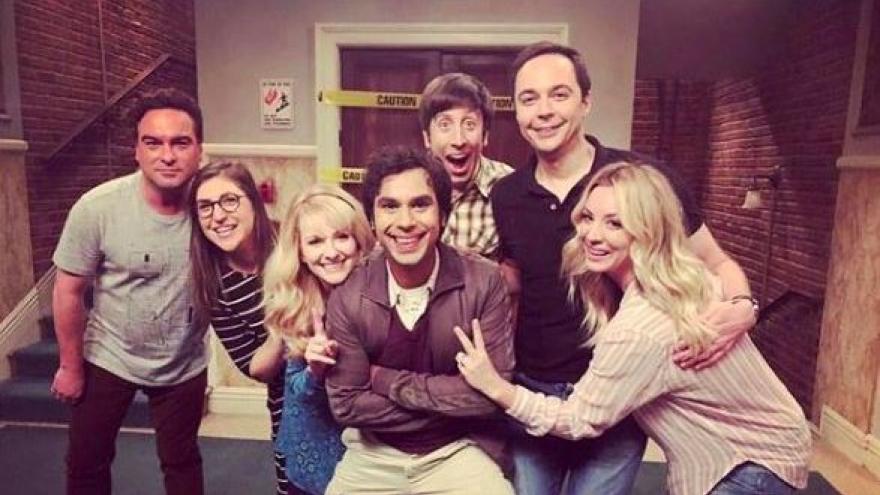
If you are unfamiliar with The Big Bang Theory, it is a show about four nerdy friends, reading right to left from the picture above: Howard Wolowitz, Sheldon Cooper, Leonard Hofstadter, Raj Koothrappali, and Penny, a girl who is almost the polar opposite of the group of guys.
It was originally released in September of 2007, but the show did not become popular for a few years after. The show is more popular than you may think, however. In 2011/2012, it was the top-rated television show and was the eighth most-watched program on TV. The Big Bang Theory generated $1 billion for Warner Bros and close to $2 billion in ad revenue in 2016 alone. Additionally, the show and its cast have received fifty-two Emmy nominations and have won ten.
I hope you believe that this show is popular before I share two conflicting opinions about the show.
When researching this topic, I came across an article titled “Here’s why The Big Bang Theory is one of the worst TV shows in human history.” I’m not kidding. I will link it here. That article is extreme and crudely written, so read at your own risk, but the theme is shared among many people.
One of the most common points is that the show simply is not funny. From beginning to end, the writers crammed jokes into unnecessary spots, wrote jokes that were not funny, and the show became saturated with the number of jokes. Take this as you will, awesome or sickening, the show averages about three and a half jokes per minute.
Surprisingly enough, The Big Bang Theory doesn’t have a laugh track. The set is in front of an audience that laughs along with the show. Even many fans agree that the audience laughs too frequently, loudly, and unnecessarily, throwing off the rhythm of the show.
The only other valid criticism is that some think it is critical and makes fun of geeks and nerds. This criticism is not as fruitful as the first because a large portion of the audience is the nerdier crowd who are interested in the same types of things the main group of guys is interested in. While the show may throw in the words “Game of Thrones” or “Star Trek” for an easy laugh once in a while, the show normalized nerd culture. The passions of the main characters were showcased in a validating way.
Now that you’ve heard the arguments against the show, you may be wondering how on earth a show, a comedy no less, thrives with poor humor. Other than the laugh track, the strength of the humor is in no way objective.
What makes the audience come back with millions of viewers per episode? The Big Bang Theory has something that few other shows have: strong female scientists casually thrown into the show. There is not a show out there that has two primary characters as female scientists who are not cutting up dead bodies in the hospital. Exactly. You haven’t seen one. Mayim Bialik and Melissa Rauch, the actresses for Amy Farah Fowler and Bernadette Rostenkowski, have talked on air about how they take pride in their roles and wish to show that women are capable and can succeed in a male-dominated space. That empowering message is highlighted throughout the show and even has episodes designated to their scientific contributions.
Another draw to the show is along the same lines. The science used in the show is real science. Mayim Bialik is a real-life neuroscientist and the equations used within the show raise the show above others that make up the science, knowing that the audience likely won’t know otherwise. While some may criticize the show for Sheldon’s over-the-top personality and speak in such a highly educated way to the point where you may not understand what he said, the principles discussed in the show are real and have been closely researched by the cast. Of course, except for Mayim Bialik, the cast wasn’t scientists, but the acting is good enough to fool the audience.
That leads to the last draw of The Big Bang Theory. The acting is phenomenal. Well, Jim Parsons’ acting is. While the cast is extremely close-knit and talented, making the show their acting that much better, the most notable character from The Big Bang Theory is without a doubt Sheldon Cooper, played by Jim Parsons. Without Jim Parsons acting, the show most likely falls flat. Still today, Sheldon Cooper clips on YouTube are receiving millions of views. Jim Parsons had nine nominations and won four Emmy Awards for his superb acting performances on the show. Now on Netflix, CBS’s Young Sheldon has gained lots of support already. A spinoff of the original show, it is continuing the legacy of the Big Bang Theory focusing solely on the most interesting character.
In this entire blog, I never explicitly shared my opinion about the Big Bang Theory. After watching the entire 12 seasons and 297 episodes twice, I can see the merit in the side that thinks the humor can get stale and the laugh track overused. That aside, The Big Bang Theory is a brilliant show and everything you could want in a feel-good show. Give The Big Bang Theory a watch if you have not already. I won’t be upset if you are not a fan, but it is certainly worth watching with an open mind!
Hi Chris.
You’d best believe I’m coming back to this blog because not only am I beyond flattered to be shouted out in the Chris Rowe’s Blog, but I’m so proud of you for choosing a vastly superior show for this week’s analysis.
The Big Bang Theory is one of my favorite sit coms in existence, and you captured what I love about it in so many ways. The normalization of nerd culture was part of what made the show so pivotal, but that was only a basis for larger jokes and themes about relationships, love, sex, and family. That last one is most important; the cast is so close-knit and their dynamic helped make the show what it is.
Your point on powerful women in stem was also captivating. The show made a point to demonstrate how strong female leads can thrive in a male-dominated space. However, it’s worth noting that Penny also demonstrated a lot of these values. At times she was the dumb blond waitress, but over the course of the show she became the successful businesswomen who wasn’t afraid to be judged for being too promiscuous or a country bumpkin. She constantly held her own against multiple phds in the room, and is one of the wittiest characters in the whole show.
Overall, outstanding blog, and not just because I like this show more than last time. You once again analyzed what made the show what it is and I especially appreciated your conclusion with your own thoughts. Thanks for a great read; I can’t wait until next time!
Hi Chris!
I’ve never seen a single episode of the Big Bang Theory, though I have read my fair share of online comments (mostly negative) about the show. That being said, I really appreciated how you mentioned arguments both for and against the show. I think it’s really important, like you said, to approach any piece of media with an open mind, to recognize it for its flaws and successes. I had no idea that one of the actresses was actually a neuroscientist or the show had been nominated for so many Emmys, which certainly lends the show an air of credibility.
Also, if you’re into comedy shows, I highly recommend any of Mike Schur’s shows (he’s the same guy who produced The Office). In particular, I recommend The Good Place, Parks and Rec, and Brooklyn 99 (basically any NBC sitcom that aired from 2010-2020). 30 Rock, Arrested Development, and Community are also favorites. All these shows fall under the same “feel-good” vein – they feature an ensemble cast left to deal with some quirky, everyday, situation. I think these shows (and The Big Bang Theory) are special, however, precisely because of their reliability. They’re able to distill universal human emotions and experiences into a 30 minute episode.
Hi Chris. I have no idea why I’m commenting on this because I’ve never seen The Big Bang Theory and I have no thoughts about it, but I guess this is my way of getting back at you and all your nosiness.
The most I’ve seen of this show wasn’t even actually of the original series. There was a point in time in 2019 where my entire Instagram explore page was populated with Young Sheldon clips. I have no idea why because that is another show I’ve never seen. This along with Aidan Gray saying it was his favorite show in second grade is all I know about it, so I’ll be judging the show entirely based off of your review
This is probably a bad take, but I think there’s a certain charm in bad jokes. There are some shows that people watch as a break. Don’t get me wrong, I love tv shows with deep themes that speak to the human psyche and jokes that take a second to get, but that’s just not what I’m looking for after a long day. In this case, I’ll take a break from my usual show and watch some brain rot instead. There are times I like the joke being low hanging and overused fruit. Sometimes, it just works.
Like my connection with the rest of the series, I had none with the cast. It really took me by surprise when I read that one of the actresses is an actual neuroscientist and I ran to Google to verify this. I think the fact that the show not only strives for representation but accuracy is very admirable. Paired with my taste for bad jokes, I think it’s something I would really enjoy.
I’ll watch a few episodes when I can and let you know what I think. Thanks for writing this Chris!
Hey Chris! I’ve heard about the Big Bang Theory so many times but I’ve never actually sat down to watch an episode. You have a nice contrast that argues for and against the show and I really like how you talked about the actors and not just the show. I’ve heard the Big Bang Theory used as a reference for so many things whether it be a connection or simply a passing remark. For some reason everytime I heard it referenced I automatically assumed it was a huge philosophy textbook rather than a sitacom. I knew Big Bang Theory was extremely popular but I never knew it won that many rewards. You emphazing the female scientists was also something I found super interesting. Using actual science and science professionals in the series shows how much effort was put into it. It was nice to see how you included the actresses takes on their characters and how Big Bang Theory was a way to showcase diversity in male-dominated areas.
I personally dislike shows that have a laugh track because it just sounds so annoying. Although there are so many mixed reviews about this series, I feel like it’s so bad that it’s good.
Hi Chris, your blog caught my attention immediately for two reasons, first I have watched the Big Bang Theory off and on with my family for years and second I honestly didn’t know that the show had many haters. I was very surprised to learn that there were so many and especially thought the Idea that the show had too many jokes was wrong because it is a comedy and since the beginning of the TV industry comedies have often overused humor to try and cheer up an audience which I felt was the reason the Big Bang Theory used jokes so often. Another thing which was brought up as a possible critique of the show was the laugh track being live audience, but I feel like that is less an issue with the show and more an issue of preference since most comedies made in the last few decades have used background laughing, either through a live audience or soundtrack to try and make the show flow more smoothly.